I almost named an AI-powered PMO event “Lodestar.”
It sounded great on its own. Sailors used a lodestar to navigate before compasses existed, so the metaphor tracked: align, predict, optimize, all in one word. I had a naming tool built for exactly this kind of story-driven name, and it delivered.
Then I remembered who was actually going to read it: PMO leads at a B2B company, deciding in about two seconds whether a Tuesday-afternoon session was worth their calendar. Nobody registers for “Lodestar.” They register for something that sounds like it fixes their Monday.
Here's the 5-round process that got me from Lodestar to the name that actually shipped, AI-Powered PMO: Align. Predict. Optimize. , and the free Claude Code skill I built afterward so I don't have to redo this by hand next time.
Round 1: let the myth fail first, on purpose
My default naming tool leans mythic — feed it a brief, it hands back names with a story behind them. For a consumer brand that's often exactly right. I ran the PMO event through it anyway, first pass, no filter, just to see what came out.
It handed back Lodestar, Wayfinder, Helm. Each one had a clean narrative: a lodestar guides ships, a wayfinder reads stars and currents, a helm steers. Good names, on paper.

The problem showed up the moment I said them out loud in the context they'd actually live in: a subject line, a event banner, a name badge at registration. A PMO director skimming an inbox doesn't have time to learn a metaphor before deciding whether a session is worth 45 minutes. Myth-first names ask the reader to do work before you've earned it.
Round 2: overcorrect, and watch it go flat
Next round, I swung the other way as hard as I could: strip out every trace of story, use only plain B2B vocabulary. AI-Powered PMO. Enterprise Project Intelligence. Smart Project Delivery.

Safe. Also forgettable. Every one of those phrases could describe a dozen different products at a dozen different companies. Nothing in them said “this one, not that one.” Generic isn't the opposite of a bad name, it's a different way of failing: instead of asking the reader to work too hard, it gives them nothing to hold onto at all.
Round 3: borrow a term that already has a job
The actual unlock came from a third direction: instead of inventing a metaphor or deleting every trace of one, I went looking for a word some other industry had already loaded with the exact meaning I needed.
Control Tower. It's a real term out of supply chain and IT operations, and it already means something specific: real-time visibility across a lot of moving parts, plus the authority to act on what you see. I didn't have to explain it. The audience already knew it from vendor demos and ops dashboards.

One borrowed term did more work than either the myth or the generic label. It read as B2B without reading as boring, and it didn't need a footnote to land.
Round 4: dial it to who's actually in the room
Control Tower still wasn't quite right, and it took a minute to name why: it's an executive word. It assumes someone with portfolio-level authority, the kind of person who says “visibility” unprompted in a meeting.
The actual audience skewed mid-level: PMO leads managing delivery day to day, not VPs setting quarterly strategy. For them, Control Tower read one size too big, the same failure as Lodestar, just quieter. I dialed back to plainer nouns tied to what they do every day: Project, Delivery.
Round 5: score it, don't vibe it
By round 5 I had a real shortlist and no more gut feel left to spend. So I built a scoring matrix instead — five questions, each candidate rated 1 to 5:
- Short — is the core name itself compact, not counting the subtitle
- B2B-aware — does it read as enterprise software, not consumer marketing
- Domain-related — does it clearly say PMO, or is it broadened on purpose
- Easy and not too broad — could it be mistaken for an unrelated product category
- Not too distant or strange — does it need an explainer sentence to land
Here's the actual shortlist, scored 1 to 5 on each axis:
| Candidate | Short | B2B-aware | Domain-related | Not too broad | Not too strange | Total |
|---|---|---|---|---|---|---|
| Enterprise Project Intelligence | 3 | 5 | 3 | 3 | 5 | 19 |
| Smarter PMO | 5 | 4 | 5 | 4 | 5 | 23 |
| Smart Project Delivery | 4 | 3 | 2 | 4 | 5 | 18 |
| Augmented Project Delivery | 2 | 4 | 2 | 3 | 3 | 14 |
| AI-Powered PMO | 4 | 4 | 5 | 5 | 5 | 23 |
| AI-Driven PMO | 4 | 4 | 5 | 5 | 5 | 23 |
| Project Intelligence | 5 | 4 | 3 | 3 | 5 | 20 |
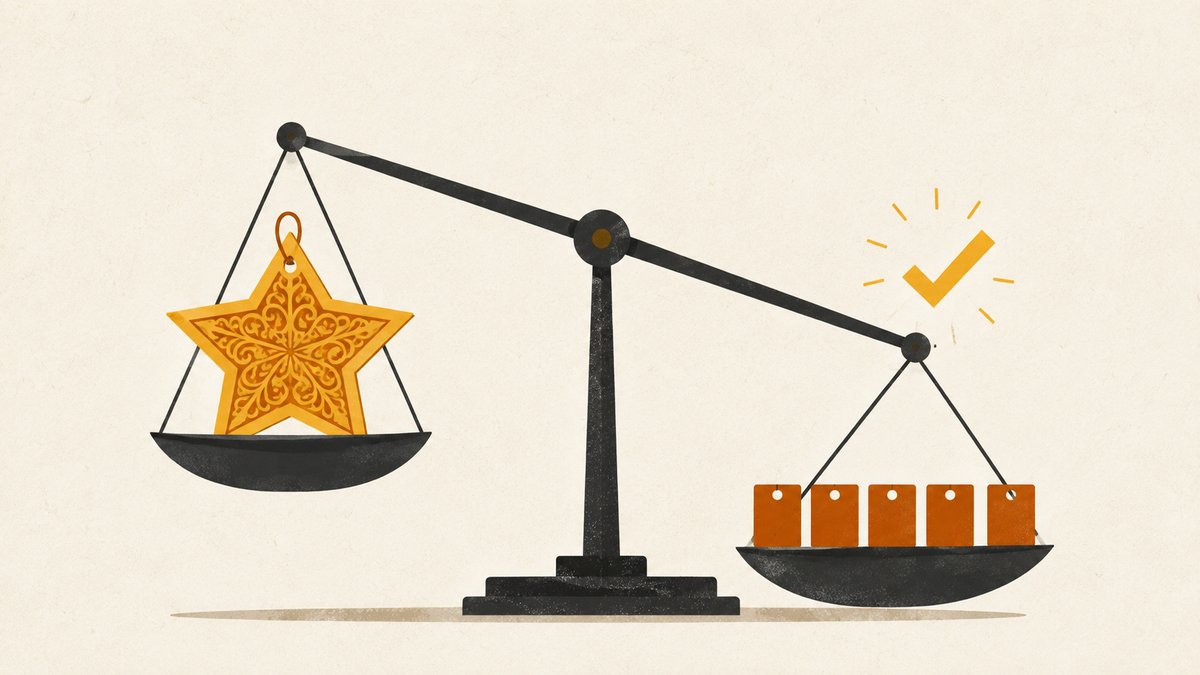
AI-Powered PMO: Align. Predict. Optimize. tied for the top score with two other candidates, Smarter PMO and AI-Driven PMO, all at 23 out of 25. The tiebreaker wasn't taste — it was the Domain-related column, the one question none of the earlier rounds had a rubric for: does this audience actually work in a PMO, or does baking that word into the name narrow the room. For this event, the answer was yes, they do. That's the deciding factor a scoring matrix catches and a gut check doesn't.
The framework, packaged
Five rounds is a lot to redo by hand every time a naming brief lands on my desk. So the process is now a free Claude Code skill, b2b-enterprise-naming:
git clone https://github.com/cc4-marketing/marketing-library
cp -r marketing-library/content/b2b-enterprise-naming ~/.claude/skills/
It runs the same five rounds automatically: starts from your brief, sources from two vocabulary lanes (plain category words and a short glossary of borrowed terms like Control Tower), builds Core Name plus Subtitle candidates, and scores the shortlist on the same five-question matrix. Full skill file and install instructions: cc4.marketing/library/content/b2b-enterprise-naming .
Common Questions
How do you know when to borrow an industry term instead of using plain language?
When the plain version reads flat and forgettable, but a full myth would be overkill for a B2B audience. A borrowed term like Control Tower or Command Center works because the audience already knows what it means from another context, so it adds specificity without adding a story you have to explain.
What's the real difference between a story-driven name and a B2B name?
A story-driven name asks the reader to learn a metaphor before it pays off, which is fine when the audience has time to fall in love with a brand. A B2B name has to work in the two seconds someone spends deciding whether to open an email or register for a session — it needs to read as exactly what it is, on first pass, with zero required backstory.
Does a five-axis scoring matrix actually beat gut feel?
It doesn't replace judgment, it forces the judgment you'd make anyway into the open where you can compare candidates on the same terms. The real value showed up at the tiebreaker: two names scored identically on taste, and the matrix's domain-related question was the only thing that actually decided between them.
Can I use this framework for a product name instead of an event?
Yes — the same five rounds apply to internal platforms, corporate campaigns, or any B2B product where the buyer is a business function rather than a consumer. The b2b-enterprise-naming skill takes any naming brief, not just events.